About the Project
The European League Against Rheumatism (EULAR) estimates that over 120 million people in Europe suffer from rheumatic and musculoskeletal diseases, including rheumatoid arthritis, osteoarthritis, and lupus. Rheumatoid arthritis affects approximately 0.3-1% of the global population, while osteoarthritis impacts about 10-15% of individuals over 60. These conditions decrease patients’ quality of life by causing pain and physical disability.
Rheumatic diseases are chronic inflammatory conditions, often involving autoimmune processes. In recent years, there has been growing attention to the role of diet in the development and progression of rheumatic diseases.
Fermentation is a 9000-year-old tradition. These recipes belong to humanity, passed down from generation to generation through the collective wisdom of health, culture, microbial transformation, and food preservation. However, global consumption of fermented foods is declining as traditional food systems are replaced by Western diets and fast food.
While many store-bought fermented foods are pasteurized to eliminate all living microbes and then re-inoculated with two to six specific bacterial strains, studies have shown that homemade ferments contain numerous strains. However, these foods are not sufficiently known or utilized by rheumatic patients.
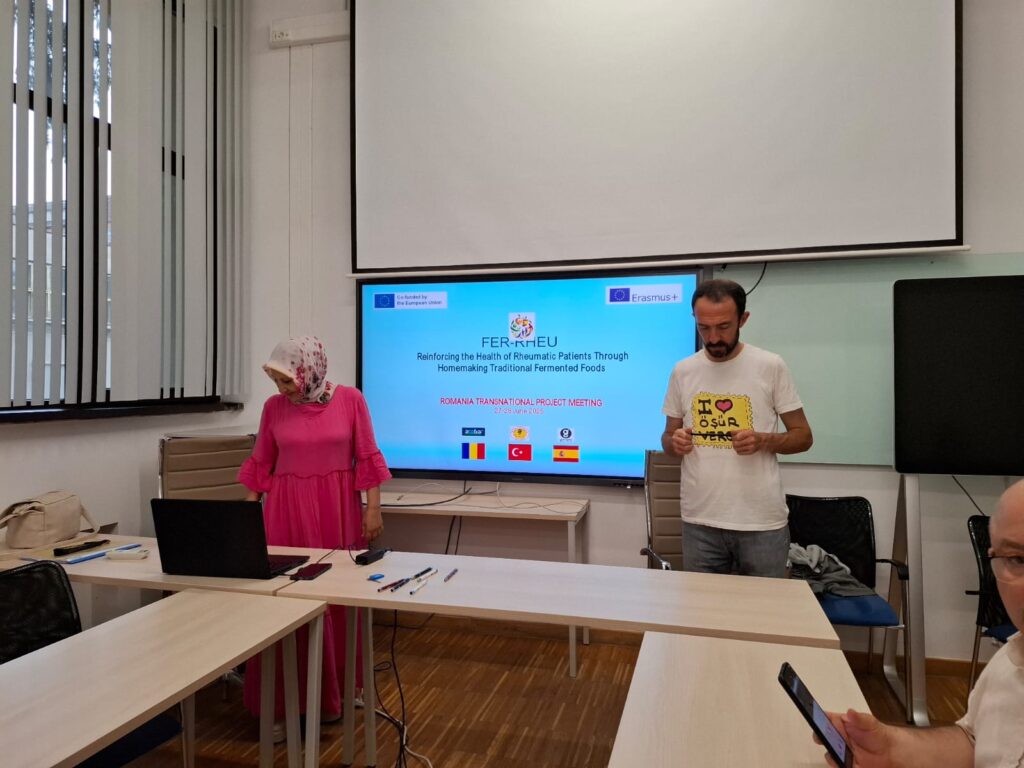
The FER-RHEU project aims to educate rheumatic patients about the health benefits of these foods and incorporate this knowledge into their daily routines. The project also emphasizes integrating traditional fermented foods into modern health practices and preserving this cultural heritage. Additionally, it seeks to expand access to training for chronic patients across the EU.
General Objective of the FER-RHEU Project :
To enhance the health and quality of life for rheumatic patients by teaching them to make traditional fermented foods rich in probiotics, encouraging their use in anti-inflammatory diets, promoting the cultural value of these foods, integrating modern health practices, and fostering a sustainable health approach.
Specific Objectives of the Project:
- To support the overall health and quality of life of rheumatic patients, caregivers, and families by enhancing their knowledge and skills in making traditional fermented foods at home and encouraging them to include these foods in their diets.
- To increase the capacity of adult trainers to make traditional fermented foods at home and their effects on health.
- To promote the cultural heritage value of traditional fermented foods, integrating them with modern health practices, and to raise social awareness.
Target Groups of the FER-RHEU project:
- 20 Rheumatic Patients in Romania (20 rheumatic patients from the Association of Rheumatic Patients from Banat);
- Caregivers and family members of 10 Rheumatic patients in Romania;
- 3-9 Adult Trainers from Partner Countries (3 from each of the project partner organizations working in the fields of food and health);
- Health Professionals and Dietitians;
- Food Sector Professionals (food sector employees, teachers and trainers ).
Duration of the project: 18 months
It starts on 01.06.2025 and ends on 30/11/2026